Trail to:
Adirondack Hunting News
Adirondack Hunting Seasons
2001 Harvest For Adirondack Counties
Weather in the Adirondacks
Adirondack Outdoor Events
Adirondack Hunting Photos
Email ADKHunter

U.S.A. Hunter


Quick Link to DEC
New York State Department of Environmental Conservation

Warren County
 Conservation Council

Protect Lake George

Like to Chat?
Check out  these
Internet Forums
ADK Sportsman
Hunting New York
NY Bowhunter
Fishing the Web
Hunting Nuts
Disabled
Sportsmans Alliance

Deer & Deer Hunting
Adirondack Deer Camp Documentary DVD Video PBS
Webmaster's Books:
Deer Hunting in
the Adirondacks

Deer Hunting in the Adirondacks by Dan Ladd

Well Seasoned in the Adirondacks by Dan Ladd

Available in bookstores
and by phone or mail order
Click Here For Info

Where's Dan?
Dan Ladd - Adkhunter.com
(Follow Dan on Facebook)

Listen to Kyle Scanlon and Dan Ladd
Saturday mornings at 6 a.m. on WOKO


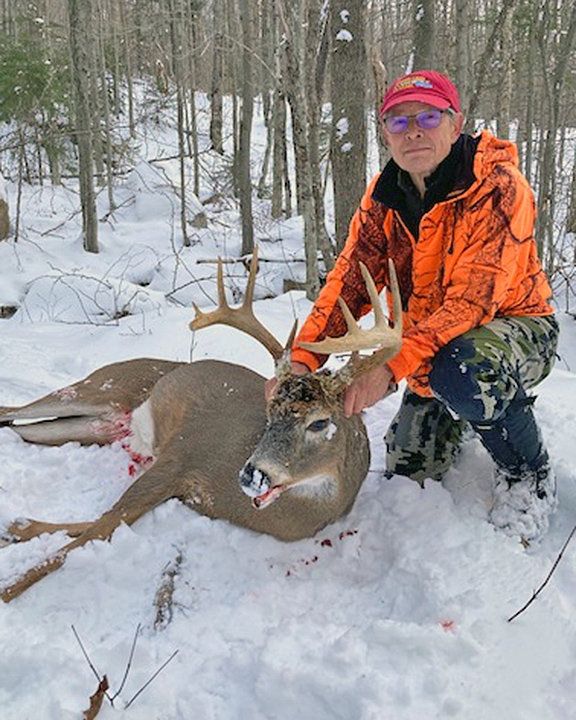
18 point Adirondack Buck

Webmaster's Uncle killed
this 18-point

Adirondack buck
in the
late 1960's.


NYSOWA - New York State Outdoor Writer's Association
Read Webmaster's
articles in
these publications
Chronicle

FISH New York -- www.fishny.com

OUTDOOR
PERSPECTIVES

Press Republican
Plattsburgh, NY
---------------
NEW YORK
OUTDOOR NEWS
CLICK HERE


DETAILS

Have you donated?
Please support
Venison Donation Coalition

Venison Donation - http://www.venisondonation.com/

Don't Move Firewood - Adirondacks

Bad News: Emerald Ash Borer hits the Catskills

http://hometownprovisions.com/
CURRENT MOON

Adirondack Hunter - Deer Hunting in the Adirondacks
The Web Site for Adirondack Hunters, New York State
Last Update:  May 9, 2013


•Latest Adirondack & Hunting News
•Latest Photos
•Fishing News
•Second Ammendment News
Media (books, videos)
•More Events
Current Trail Conditions


The Dug Mountain Club in Speculator
is accepting memberships

Click here for more info:
 http://www.dugmountainpondsclub.com/location.html

Don't Miss

May 1-31: Spring Turkey Season

May 15: Mohawk Valley
Freedom Rally


May 15: 3D Archery League Begins
Hudson Falls
Fish & Game Club

May 18-19: 
NEACA Arms Fair
Lake George, NY


Double Bearded TurkeyWhat a difference a week makes. On opening day of turkey season the north woods were mostly brown and gray. In many places they are now green. The cover is here and so are the black flies! Turkeys still continue to frustrate this hunter but at the same time I am learning so much about a new area.They are there, I just have to find them. We're hearing some, but not a lot, of success stories. Many hunters are reporting henned-up birds and last weekend I watched a pair mate in an open field as a coyote tried to sneak in. This morning I saw a black squirrel and a huge porcupine while turkey hunting. Nature always gives you something new. On the days I have to hunt I've also been sticking it out until noon but in reality most of the action I've had has been in the first few hours of the day. We'll keep at it and get some new photos up soon. Hunt hard and be safe

(5/1)Turkey Fever, Part II:
Well, it's turkey season and as is so often the case the turkeys once again got the best of this hunter. My "sure thing" on a roosted gobbler went sour when I found another hunter had the same idea as me. That's public land hunting. Plan B resulted in some distant gobbling and when I got up to change locations I busted a tom that had come in silently. To top it off, last night I also busted my favorite box call, a Quaker Boy Raspy/Shorty, and had to opt for Plan B there as well. No worries, there is still plenty of hunting ahead. I didn't hear much shooting today but two good friends killed birds.Good luck out there!

Photo: Lou Ardito of Long Island with an Adirondack double-bearded gobbler taken May 1, 2013 in Fort Ann with Ross Sheridan.


The Latest...

Turkey Virus Alert in NY

Outdoor Life on NY Youth Deer Hunt

DEC Releases 2012 Deer Take Numbers


Thomas Sowel on Guns: http://www.humanevents.com/2013/04/16/sowell-fact-free-crusades/

Letter: Albany Police to Gov. Cuomo


 PHOTOS

2013 Youth Turkey Weekend
Youth Turkey Hunting in New York
Jack Foster Comar, age 13, South Glens Falls
Youth Turkey Hunting
Christian Chaney, age 13, of Hartford
Hunter Frost
Hunter Frost, age 14, Argyle
Hartford
 Kevin Haux, age 14, Hartford
Schuylerville
Breck Breen, age 12, Saratoga
Turkey
RJ Elliott, age 14, Saratoga County
Kids with turkeys
Trey, Taylor, Lucas and Logan DiNitto of the Rome, NY
area had a fine youth turkey season!

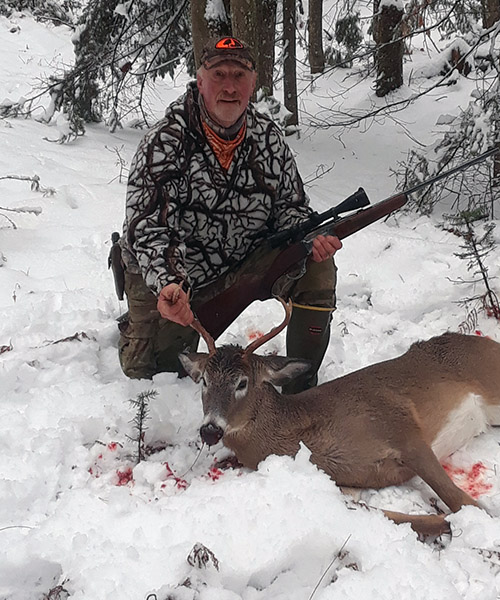
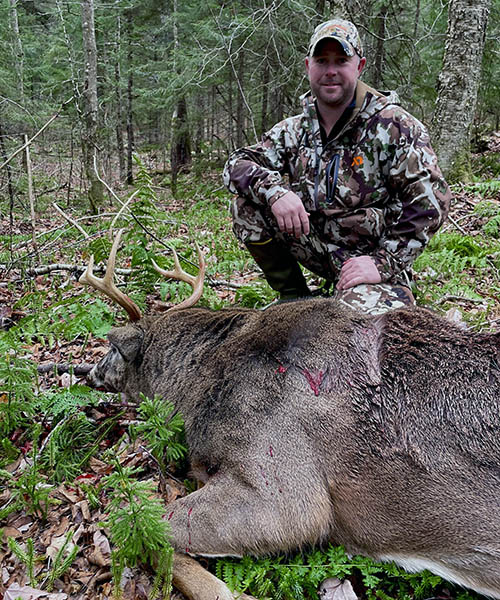
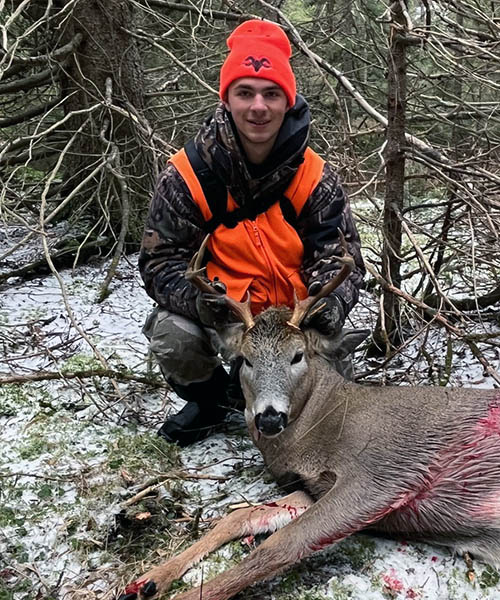
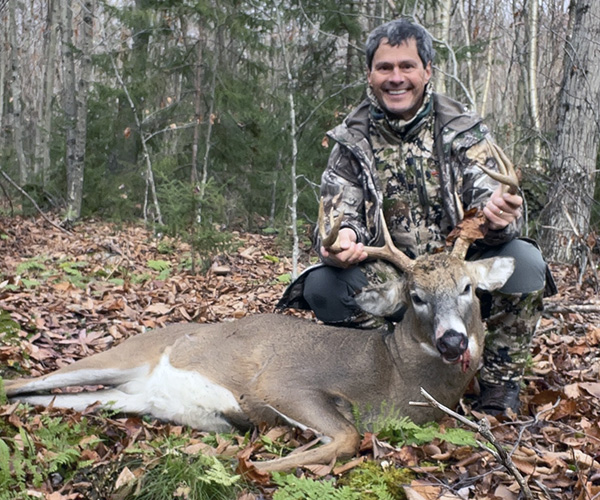
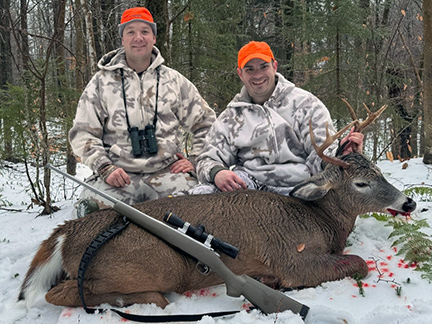
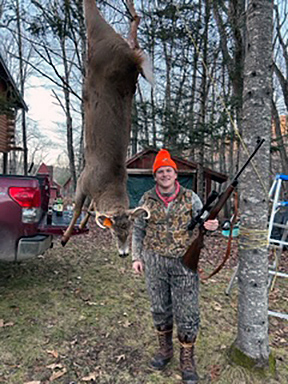
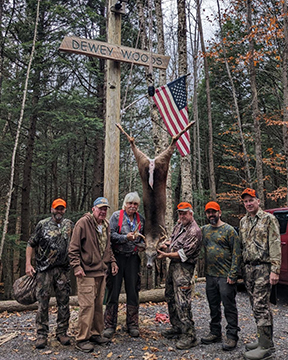
Latest Deer Photos

Long Lake
Phil and Tyler Talucci with Tyler's
8-pointer taken in Long Lake.
Adirondack Bone Collector
Adirondack deer tracker Steve Grabowski's dog
is a real bone collector!

Mike Lempka with an Orange County 155 - pound, 8-pointer
Click here for more Southern Zone Bucks


Alex Lempka with a 134-pound Orange County 8-pointer.

Southern Zone bucks of New York
Webmaster's uncle, Ed Ladd Sr., with a fat 3-pointer taken
on Nov. 17 in Salem. His first buck in many years!
Indian Lake
Vito Bet took this 180-pound, 9-pointer
on Nov. 12 near indian Lake
Franklin County
Rick Caron with a 160-pound, 8-pointer taken on
Nov. 23 in Franklin County
Thurman
This 200-pound, 8-pointer was shot by Dillon Wendell
on Nov. 4 in Thurman, NY

Sylvan Falls
Kevin Willmart with his 4-pointer killed Nov. 14
at the Sylvan Falls Club, St. Lawrence County.
Sylvan Falls
Roger “Porky” Willmart with his 5-pointer killed on
Nov. 10 at the Sylvan Falls Club, St. Lawrence County.
 

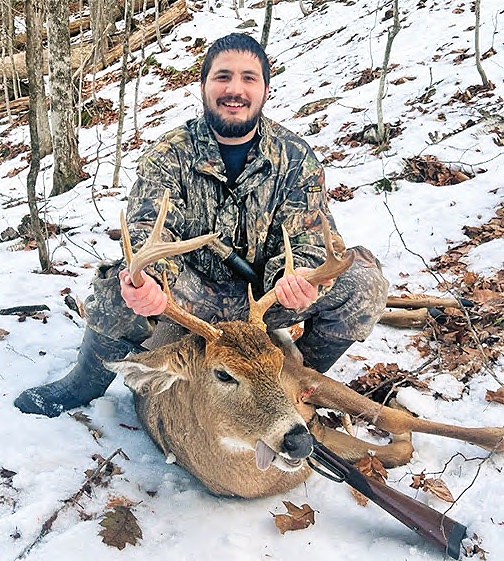
Alan Brown
Alan Brown with his 10-pointer taken on the second day of muzzleloading (Oct. 14)
in Hamilton County. The buck scaled 242 pounds dressed out
and was green scored at 147 inches.


NEWS


DEC TO PREPARE MANAGEMENT PLAN FOR CHAZY HIGHLANDS COMPLEX
Public Meeting to be Held on May 23 in Saranac

(5/9) The New York State Department of Environmental Conservation (DEC) is preparing a management plan for nearly 60,000 acres of Forest Preserve
and other State-managed lands in the Chazy Highlands Complex, DEC Regional Director Robert Stegemann announced today. The lands spread
across 493 square miles in 34 separate parcels in the northeastern Adirondack Park and are located in the towns of Bellmont, Duane, and
Franklin in Franklin County and the towns of Altona, Black Brook, Dannemora, Ellenburg, and Saranac in Clinton County.

*While there are few developed recreational facilities in the Chazy Highlands Complex, hunting and fishing are two popular activities in the
area, which also offers great opportunities for hiking and viewing wildlife,* said Director Stegemann. *The management plan for the
Chazy Highlands Complex will allow public recreational use of this area, including vast hunting and fishing opportunities in line with Governor
Cuomo*s NY Open for Hunting and Fishing initiative, while protecting this natural resource.*

Public involvement is essential to the development of a complete, accurate and responsive UMP for the Chazy Highlands Complex. DEC is
seeking information and ideas that will lead to clearly stated goals and objectives for the care and stewardship of these public lands. Everyone
with an interest in the area is encouraged to participate in the planning process by providing information and suggestions for its management.

A public open house for the Chazy Highlands Complex will be held at 6:30 p.m. on Thursday, May 23 at the Saranac High School in Saranac. The
open house will provide an opportunity for the public to meet with DEC staff and share their thoughts, ideas and suggestions regarding
management of State lands within this unit. This will be the first of many opportunities for the public to be involved in the planning
process.

The plan will address the management of 34 separate parcels of state land including 48,362 acres of Forest Preserve lands classified as Wild
Forests; 10,214 acres of State Forest lands; and 2,331 acres in two  Wildlife Management Area lands. The plan will also include the
recreation management plan for approximately 2,000 acres of the Lassiter Conservation Easement Lands. The Upper Chateaugay Lake Boat Launch Site
will also be included in the management plan.

The plan will not include the recreation management plans for the Sable Highlands and Lyme Adirondack Conservation Easement Lands. However it
will include some aspects of the management of recreation and access on those lands where there is direct interaction with the lands in the Chazy Highlands Complex.

Natural features in the Complex include Lyon Mountain,  Haystack Knob, Norton Peak, and  Ellenburg Mountain; Upper Chateaugay Lake and Chazy
Lake; and Saranac River and Great Chazy River. The primary recreational uses are fishing and hunting; however the public also participates in
hiking, camping, cross country skiing, snowshoeing, snowmobiling and bird/wildlife watching on these lands. Both the trail to the Fire Tower
on the Lyon Mountain and the Lewis Preserve Wildlife Management Area are frequented often by the public.

A UMP for the Chazy Highlands Complex must be completed before new recreational facilities such as trails, tent sites and parking areas can
be constructed. The planning process will involve an inventory of the natural resources of the area and an analysis of the ability of its
lands and waters to accommodate public recreational use. The plan will culminate in a series of management actions to be implemented over a
five-year period. Management issues under consideration by DEC*s planning team include public recreational access and increasing trails
and campsites.

DEC is responsible for developing a management plan for each Forest Preserve management unit identified in the Adirondack Park State Land
Master Plan. The Master Plan, developed by the Adirondack Park Agency (APA), applies a classification such as wilderness, primitive, canoe or
wild forest to each unit and gives guidelines for the management of the units in each classification. The guidelines for the Chazy Highlands
Complex require that it be managed to encourage appropriate kinds of recreation while providing a high level of protection to the natural
resources.

In the Adirondacks, UMPs are developed by DEC in consultation with APA, who is responsible for ensuring that the plans are consistent with the
Master Plan. Upon completion of the inventory of natural resources, analysis of recreational use and review of public comments, the Chazy
Highlands Wild Forest planning team will prepare a draft UMP. The completed draft plan will be widely distributed for public review and
comment and a public meeting will be scheduled to discuss the draft.  Any interested individual or organization wanting to be included on a
mailing list for information about the development of the unit management plan or wishing to submit comments is encouraged to contact
planning coordinator Dan Levy, NYSDEC, P. O. Box 296, Ray Brook, New York 12977. Mr. Levy may be reached by telephone at 518-897-1291 or by
e-mail at mailto:r5ump@gw.dec.state.ny.us.


SPRING TURKEY SEASON OPENS MAY 1
 
            (5/1) The 2013 spring turkey season opened May 1 in all of upstate New York lying north of the Bronx-Westchester County boundary, New York State Department of Environmental Conservation (DEC) Commissioner Joe Martens announced.
 
            “Turkey hunting remains a very popular activity with more than 100,000 turkey hunters taking to the field each spring,” Commissioner Martens said. “As part of Governor Cuomo’s NY’s Open for Hunting and Fishing initiative, the annual Youth Turkey Hunt took place this past weekend and was an excellent chance for young hunters to spend time afield with experienced adult hunters to learn about conservation first-hand, gaining the necessary knowledge and skills to become safe and responsible members of New York’s hunting community.”
 
Other Important Details for the Spring Turkey Season, May 1-31, 2013:
 
·         Hunting is permitted in most areas of the state, except for New York City and Long Island.
·         Hunters must have a turkey hunting permit in addition to their small game hunting or sportsman license.
·         Shooting hours are from one-half hour before sunrise to noon each day.
·         Hunters may take two bearded turkeys during the spring season, but only one bird per day.
·         Hunters may not use rifles or handguns firing a bullet. Hunters may hunt with a shotgun or handgun loaded with shot sizes no larger than No. 2 or smaller than No. 8, or with a bow and arrow.
·         Successful hunters must fill out the tag which comes with their turkey permit and immediately attach it to any turkey harvested.
·         Successful hunters must report their harvest within seven days of taking a bird. Call 1-866-426-3778 (1-866 GAMERPT) or report harvest online at http://www.dec.ny.gov/outdoor/8316.html.
 
            For more information about turkey hunting in New York, see the 2012-13 Hunting and Trapping Regulations Guide or visit the “Turkey Hunting” pages of the DEC website at http://www.dec.ny.gov/outdoor/8366.html.
 
            New York has an extremely safety-conscious generation of hunters, largely due to the annual efforts of more than 3,000 dedicated volunteer Sportsman Education instructors. Even one incident is too many, so be sure to follow the cardinal rules of hunting safety: (1) assume every gun is loaded; (2) control the muzzle; (3) keep your finger off the trigger until ready to shoot; (4) be absolutely sure of your target and what may be beyond it; and (5) don’t stalk!  Set-up with your back against a large tree and call birds to you. To find a sportsman education class in your area, go to http://www.dec.ny.gov/outdoor/9191.html or call 1-888-HUNT-ED2 (1-888-486-8332).
 
Results from 2012:
            An analysis of the 2012 spring turkey take, including a county-by-county breakdown, can be found on the DEC website at http://www.dec.ny.gov/outdoor/30420.html.
 
Participation Opportunities:
            DEC Seeks Turkey Hunters for Ruffed Grouse Drumming Survey: Turkey hunters in pursuit of that wary gobbler in the spring are ideally suited for monitoring ruffed grouse during the breeding season. The characteristic sound of a drumming male grouse is as much a part of the spring woods as yelping hens and gobbling toms. Turkey hunters can record the number of grouse they hear drumming while afield to help DEC track the distribution and abundance of this game bird. To get a survey form, go to http://www.dec.ny.gov/animals/48169.html or call (518) 402-8886.
          
            To participate in DEC’s Summer Wild Turkey Sighting Survey or other wildlife surveys visit the “Citizen Science” page of the DEC website, http://www.dec.ny.gov/animals/1155.html.
 
            Do you have photos from a spring turkey hunt you would like to share? DEC has created a Hunting and Trapping Photo Gallery for junior hunters ages 12-15, young trappers under age 16 and hunters who have harvested their first big or small game animal. If you are the parent or legal guardian of a junior hunter, or if you are an adult who would like to share your first successful hunt, visit the photo gallery on the DEC website, http://www.dec.ny.gov/outdoor/54055.html.
 
            Governor Cuomo's NY Open for Hunting and Fishing Initiative is an effort to improve recreational activities for in-state and out-of-state sportsmen and sportswomen and to boost tourism opportunities throughout the state. For more information, go to http://www.governor.ny.gov/press/02202013-ny-open-for-fishing-and-hunting.


DEC ANNOUNCES NEW TROUT FISHING OPPORTUNITIES
ON FORMER FINCH PAPER LANDS
          
 (5/1) Fishing opportunities on stretches of shoreline along four Adirondack trout waters and one pond are now open to anglers New York State Department of Environmental Conservation Commissioner Joe Martens announced today.
 
“Through Governor Cuomo’s NY Open for Hunting and Fishing Initiative, DEC is expanding access for anglers,” said Commissioner Martens. “The fishing rights provide previously unavailable public access for anglers on nearly ten miles of shoreline on some of the best trout waters in the Adirondacks. Conservation easements protect natural resources and provide public recreational opportunities while providing the economic benefits of tourism and timber harvest to local communities.”
 
Governor Cuomo’s NY Open for Hunting and Fishing Initiative is an effort to improve recreational activities for in-state and out-of-state sportsmen and sportswomen and to boost tourism opportunities throughout the state. This initiative includes improved access for fishing at various sites across the state, stocking as much as 900,000 pounds of fish, expanding fishing clinics and increasing hunting opportunities in various regions. Through these efforts, New York has become a premier destination for bass fishing tournaments at the Great Lakes, Finger Lakes, Lake Champlain and Oneida Lake and purchased more than 26,000 acres in fee and easements across the state in 2012 open to sportsmen for hunting, fishing and trapping.
 
            The fishing rights on these waters are part of the conservation easements purchased on the lands formerly owned by the Finch Paper Company. The fishing rights allow the public to walk along the stream banks for the sole purpose of fishing.
 
Public fishing right signs are posted on the stream bank of each section and anglers must stay on the banks of the posted sections. Trespassing on adjacent private lands is prohibited. The sections of waters open to angling are:
 
Cedar River
The shorelines of three sections, with a total length of 3.1 miles, of the Cedar River in the Town of Indian Lake, Hamilton County, are open to the public for fishing. This stretch of the river is located south of the Cedar River Road near the community of Indian Lake.
 
The largest section is 2.3 miles long and adjoins a section of forest preserve lands providing more than four continuous miles of public fishing. The two other smaller sections are connected by forest preserve lands which together provide another continuous mile of public fishing. The Cedar River contains brook trout, brown trout and smallmouth bass. DEC stocks brook trout in the river.
 
DEC plans to construct parking areas and access trails in the near future. Once completed two other sections of this stretch of the river will be open for public fishing.
 
Fishing Brook
            Four miles of shoreline along Fishing Brook in the Town of Long Lake in Hamilton County north of Route 28N are open to fishing. Fishing Brook is located between the communities of Long Lake in Hamilton County and Newcomb in Essex County. It contains brook trout.
 
DEC plans to construct parking areas and a boat launch for small trailered-boats on 60-acre County Line Flow and a parking area and boat launch for car top boats on 47-acre Fishing Brook Bog. The two waters, which are located at each end of this stretch of Fishing Brook, will be open for the public to fish by boat.
 
The Branch and Palmer Pond
            A 1.6-mile stretch of The Branch immediately upstream of Palmer Pond and 0.7 miles of the pond’s shore are open for fishing. These two waters are located in the Town of North Hudson, Essex County south of the Blue Ridge Road (aka Boreas Road). Both waters contain brook trout which DEC stocks annually. Additionally, brown trout are present and stocked in Palmer Pond.
 
Anglers can now fish the entire 1.4 miles of Palmer Pond’s shoreline, except on the dam itself, as the public fishing rights on the pond’s shore adjoin to forest preserve lands that abut the remainder of the pond. A small parking area is located near the dam at the eastern end of Palmer Pond. Pull off sites along the Blue Ridge Road are located at the western end of the pond and along The Branch.
 
 DEC plans to improve the parking area near the dam, construct an access site for launching small car-top boats and install a fishing pier on Palmer Pond. Once completed, the public will be able to fish the 28-acre pond by boat.
 
English Brook
            English Brook is located along Somerville Road the Town of Warrensburg, Warren County. A 0.4 mile section of the brook which contains brook trout is open to public fishing. DEC stocks this water which is west of Route 9 between the communities of Warrensburg and Lake George.
 
Parking is available near all these waters but is limited at this time. DEC will work this summer to develop and sign additional parking areas.
 
More information on the sections of water now open to the public including descriptions, directions and maps can be found on the DEC website at: http://www.dec.ny.gov/lands/71954.html.
 
This web page will be updated when parking areas, access trails and boat launch site improvements are completed and when the additional sections are open for public fishing.


GOVERNOR CUOMO ANNOUNCES STATE CLOSES ON SECOND PHASE OF FORMER FINCH LAND ACQUISITION IN THE ADIRONDACKS
The Nature Conservancy to Provide $500,000 to State for Adirondack Communities to
Promote Economic Development and Tourism

(5/2) Governor Andrew M. Cuomo today announced that New York State closed on 9,300 acres of the former Finch Pruyn lands in the Adirondacks. The acquisition of these properties, announced in August 2012 by the Governor, will ensure their continued protection and an expansion of tourism opportunities in the Park, benefitting local communities.

The land parcels purchased today from the Nature Conservancy include: the OK Slip Falls tract in Hamilton County; the Casey Brook tract in Essex County; the Spruce Point tract in Washington County; the Saddles tract in Washington County; the Hudson Riverside/Ice Meadow Tract in Warren County; and the Indian River tract in Essex and Hamilton counties.

“There is not a more fitting way to celebrate Earth Week than protecting spectacular property in the Adirondack Park that will create tourism opportunities and bring more visitors to this magnificent place,” Governor Cuomo said. “With these newest acquisitions, we are building upon past state investments in the Adirondacks as we enhance a world-class Park that contains a wealth of private and public lands in one of the most beautiful settings on earth.”

“The Adirondacks are a unique part of New York and lead the world in linking the conservation of natural resources with sustainable community and economic development. Adding these former Finch lands to the Forest Preserve will open a magnificent stretch of the Upper Hudson to the public and attract new visitors to the interior of the Adirondacks,” Department of Environmental Conservation Commissioner Joe Martens said.

As part of this historic conservation effort, TNC also granted $500,000 to the State to support community connections and economic development linked to the former Finch lands in Newcomb, Minerva, North Hudson, Indian Lake, Long Lake and other towns.
Bill Ulfelder, Executive Director of The Nature Conservancy in New York, said, “Thanks to the leadership of Governor Andrew Cuomo and Commissioner Joe Martens, New York State is strengthening its remarkable conservation legacy with these additions to the Adirondack Park. Keeping the forests, rivers, streams and lakes of the region protected is not only good for tourism, recreation and wildlife, but also helps keep New York’s water clean and reduces the risk of floods during extreme weather events like Hurricanes Irene and Sandy.”

Michael Carr, Executive Director of The Nature Conservancy’s Adirondack Chapter, said, “The scale of this project is enabling us to collectively achieve significant ecological protections, while allowing for a variety of compatible uses, as well as creating some really exciting, world-class recreational opportunities. Getting to this point is the result of a lot of hard work by state officials, local community leaders, forestry professionals, and others willing to roll up their sleeves and find innovative solutions.”

In 2007, TNC purchased the entire 161,000-acre property from Finch Pruyn. TNC sold 90,000 acres to a private company for timber management. The State acquired conservation easements on these lands in 2010 to ensure the lands would be protected and maintained for sustainable, working forests in communities across the North Country.

TNC managed a 69,000-acre landholding with the intent to ensure its protection. Under an agreement announced last summer by Governor Cuomo, the 69,000-acre property will be sold to the state pursuant to a phased five-year contract which began in 2012. Once complete, the acquisition of the former Finch lands will be the largest addition to the State Forest Preserve in 118 years.

This acquisition complements the State’s purchase of the 18,318-acre Essex Chain of Lakes property in late 2012. The State will pay The Nature Conservancy $6.3 million for a total of approximately 9,300 acres and will pay full property taxes on the land.

DEC and APA are working together to plan for the future classification of the former Finch lands. DEC has completed a Proposal for Public Access and State Land Classification for the entire 69,000-acre property, based upon input from Adirondack local governments and other stakeholders, and submitted it to the Adirondack Park Agency and to Park stakeholder groups.

The APA will release a draft land classification plan for the parcel later this year. A public comment period will begin once the draft plan is released and public hearings will be held before the final recommendations are sent to the Governor for approval. Once land classifications are approved, DEC will develop Unit Management Plans that will guide long-term public and administrative use of the properties. An open and transparent process, including a public comment period, will be held for each Unit Management Plan.

Currently, the APA and DEC are working on an interim public access plan to provide early access to the Hudson and Cedar Rivers through the Essex Chain of Lakes and Indian River Tracts. This interim public access plan is expected to be released in the next few weeks with public motor vehicle access to begin in late May or early June depending on road conditions.

Town of Newcomb Supervisor George Cannon said, “The acquisition of these tracts will increase hiking opportunities and provide direct access to the Upper Hudson River from the Newcomb Town Beach. Attracting more visitors to the interior should increase economic opportunities for Adirondack communities.”

Town of Indian Lake Supervisor Brian E. Wells said, “The state’s acquisition of the OK Slip Falls and Indian River parcels represents a new mind set coming out of Albany. The Governor has proposed these land acquisitions as not only an environmental necessity but also an economic necessity for the state. DEC is charged with reaching a balanced approached in their recommendations of classification to the APA. DEC has reached out to the local communities to ask input to be put forward to the APA. If these classifications are done with local input from the communities who are going to be affected the most, it could lead to a resurrection in the park.”

The tracts to be acquired during the next several weeks include:

Indian River/Hudson River, Towns of Indian Lake and Minerva, Hamilton and Essex Counties: The most exciting and popular whitewater rafting experience in the Adirondacks starts on the Indian River and continues for nearly 15 miles down the Hudson River Gorge. Adding this 940-acre tract to the publicly owned forest preserve will keep the experience wild. (See also OK Slip Falls tract.) The parcel is critical to preserving the rafting experience that draws 25,000 people annually. It is also key to unlocking new recreational opportunities by providing long-awaited access and take-out points that will make the enticing stretch of the upper Hudson River to the north a viable option for paddlers wishing to experience calmer waters than the class III/ IV rapids of the Gorge.

This will be an incredible draw for visitors seeking this unique and limited wild rivers experience, bringing people to the communities of Indian Lake, Blue Mountain Lake, Long Lake, Newcomb and Minerva to seek accommodations and supplies. This aspect of the project will be open to public use this year as discussed above. Up-to-date details on public access will be provided on DEC’s website at: www.dec.ny.gov.

OK Slip Falls, Town of Indian Lake, Hamilton County: One of the most spectacular waterfalls in the Adirondack Park, OK Slip is part of a 2,800-acre property that will soon be made available to the public for hiking and other outdoor pursuits. The tract contains 2.1 miles of the Hudson River, the Blue Ledges, the Hudson River Gorge, as well as Carter, Blue Ledge and Pug Hole ponds. This property also contains one of the most exciting sections of a popular whitewater route that draws more than 25,000 adventurers who annually pass through this property.

This tract is believed to harbor more rare and significant plants, mosses and liverworts than any other site in the Adirondack Park. It is also the only place in New York State where purple mountain saxifrage, hair-like sedge, wild chives and other rarities are known to exist.

Adirondack soils are typically acidic due to the geological makeup of the predominate bedrock. In this area, the bedrock is streaked with mineral-rich Grenville marble. One-billion-year-old marble outcrops in places like the Blue Ledges and OK Slip Falls have created growing conditions favorable for unique assemblages of plants to thrive. Blue Ledges is all marble, and because it faces northwest and remains wet through the summer it has functioned as a refuge—a small, detached piece of arctic mountain—and allowed a relic community of northern plants to persist. More than one-third of the 96 mosses that grow at Blue Ledge are uncommon or rare. Likewise, about one-third of the 69 mosses and liverworts at OK Slip Falls are also uncommon or rare. At OK Slip ravine, Braun’s holly fern and Pennsylvania buttercup are among the uncommon or rare vascular plants found.

Casey Brook, Town of North Hudson, Essex County: The 1,587-acre Casey Brook tract is strategically situated south of the High Peaks area of the Adirondack Park to the west of the Elk Lake Preserve. It provides a direct hiking connection to Mount Marcy and other High Peaks, as well as public hunting and camping opportunities. It adjoins the Boreas Ponds Tract, part of the former Finch lands that will be acquired later by the State.

The Saddles, Town of Whitehall, Washington County: This 2,540 –acre property also is outside the Adirondack Blue Line, in Washington County. This property was not part of Finch Paper’s holdings, but was acquired by The Nature Conservancy with the intent that it be sold to the state. The tract features dramatic cliffs and more than 2,250 feet of undeveloped shoreline on Lake Champlain’s South Bay. There is a complex of streams, marshes, swamps, and floodplain forests that dominate the lowlands of the South Bay. Talus slopes, cliffs and northern hardwood forests characterize the surrounding uplands. The large, intact forest, exposed rocky ridges and slopes of the Saddles Mountain provide foraging grounds for Eastern timber rattlesnake (threatened) and habitat for peregrine falcon (endangered). There is a unique wild rice marsh at the base of the Saddles.

Spruce Point (AKA Dolph Pond), Town of Whitehall, Washington County: As this 726-acre piece is outside the Adirondack Park, it will become a new state forest to be used for sustainable timber harvesting, hiking, hunting, camping and other outdoor recreational opportunities, free of charge to the public. The parcel adjoins state conservation easement land to the west and is within an important wildlife pathway area between the Champlain and Lake George basins and Vermont’s Green Mountains. The property features interesting ridges, a variety of forest types, including Appalachian oak hickory and hemlock northern hardwood, and provides habitat for black bear, white tail deer and other wildlife.

Hudson Riverside/Ice Meadow Tract, Town of Chester, Warren County: This 727-acre parcel is an ecologically significant piece along 1.5 miles of the Hudson River, which links to a previously acquired Forest Preserve parcel. DEC will work with the Town of Chester to develop a trail system that avoids impacts to fragile plant life and private properties.


STATE TO PURCHASE 2,460 ACRES OF LAND IN THE

LAKE GEORGE WATERSHED REGION
 
(5/1) Through the Environmental Protection Fund, New York State has purchased more than 2,460 acres that will help protect the world-renowned scenery and water quality of Lake George and its tributaries, New York State Department of Environmental Conservation (DEC) Commissioner Joe Martens announced today as part of DEC’s weeklong celebration of Earth Day. 
 
The purchases include the Cat and Thomas Mountains parcel, a 1,900-acre property in the town of Bolton (Warren County), previously acquired by the Lake George Land Conservancy (LGLC), which was sold to the State for $1.5 million. The State also purchased the 565-acre East River Road Tract of the former Finch lands in the Town of Bolton from The Nature Conservancy for $381,000. This parcel is adjacent to the Cat and Thomas Mountains parcel. The parcels will be added to the State Forest Preserve. The State will pay full local property and school taxes on the newly acquired land.
 
“By increasing open space funding by $2.5 million in this year’s budget, Governor Cuomo has placed a priority on preserving and conserving New York’s natural resources,” said Commissioner Martens.  “These land acquisitions ensure that a key drinking water supply in Lake George’s watershed remains undeveloped permanently. This investment of $1.8 million to protect the ‘Queen of New York Lakes’ is part of a comprehensive effort by the State to maintain the Lake’s outstanding water quality, slow the spread of invasive species and promote outdoor recreation and tourism. With this acquisition, the State now fully manages 46 percent of the land area of the watershed, most of it in beautiful forests that encourages outdoor recreation and protect the lake.”
 
A portion of the Cat and Thomas property also includes approximately 65 percent of the watershed encompassing the Town of Bolton’s drinking water supply at Edgecomb Pond.   Finkle Brook, which is the primary source for Edgecomb Pond, runs entirely on either Cat and Thomas Mountains or on the water district’s property.
 
Nancy Williams, Executive Director of LGLC, said, “We are thrilled that DEC is purchasing Cat and Thomas Mountains, these jewels of Bolton Landing, and that the land will now be protected forever as part of the Adirondack Forest Preserve.  We have always felt a special responsibility to protect these mountains.  They provide not only an important destination for tourists but many residents regularly enjoy the hike along our trails.”
 
State Senator Betty Little said, “This parcel is part of the Lake George watershed.  The State’s
acquisition is a small but very important investment that will benefit those depending on the lake for drinking water and help ensure Lake George remains a premium tourist destination in the years ahead.”
 
State Assemblyman Dan Stec said, “As an avid hiker, I can attest to the breathtaking views Cat and Thomas Mountains provide of Lake George. I also remain committed to protecting the water quality of Lake George, as well as the drinking water for the residents of Bolton.  This acquisition will both provide recreational opportunities and preserve water quality for the residents of the Lake George area.”
 
Ron Conover, Supervisor of the Town of Bolton, said, “We are fortunate that LGLC purchased Cat and Thomas in 2003 and protected our water supply pond, Edgecomb Pond. The trail system throughout Cat and Thomas Mountains attracts tourism dollars to the community and LGLC has always actively participated to provide more incentives for people to enjoy Bolton Landing.”
 
Mayor of the Village of Lake George Robert Blais said, “With this acquisition, the State of New York has once again demonstrated their partnership with our local communities in protecting our drinking water supply, maintaining the high quality of our lake and preserving our beautiful forests and recreational opportunities for generations to come.”
 
The Lake George Land Conservancy has developed an extensive trail system within Cat and Thomas Mountains and thousands of hikers register annually and enjoy the trails. Bolton Landing is a popular tourist center and many come to hike these mountains. The mountain peaks provide spectacular views of Lake George, Gore Mountain and Vermont’s Green Mountains.
 
The Cat and Thomas Mountains parcel are now open to the public and will remain open. A loop trail beginning at the year-round maintained parking lot off Valley Woods Road provides for a leisurely but moderately difficult six-hour hike.  An easier hike from the parking lot to the beaver ponds below Cat Mountain may be as short as one hour. LGLC has applied to DEC to continue to maintain the trails through DEC’s Trail Cooperative Agreement program.
 
The East River Road parcel is expected to be open to the public in October 2013.
 
The LGLC priorities for Cat and Thomas Mountains have been to protect the drinking water supply of Bolton Landing, the pristine water of Lake George and the magnificent view of these forested mountains from all vantage points. The LGLC has partnered with DEC since 1988 to protect Lake George.
 
Adding these properties to the Forest Preserve protects the natural resources and spectacular scenery of Bolton Landing and protects nearly the entire watershed of the town of Bolton’s water supply at Edgecomb Pond.  The State will develop recreational plans and work with the Adirondack Park Agency to determine classifications of the lands to encourage public access and appropriate use of the properties while also protecting their outstanding natural resource values.
 
When classifications are approved, DEC will develop Unit Management Plans to protect the resources and to continue the work of LGLC to promote increased tourism. A public comment period will be held for the Unit Management Plan.
 
The Lake George Land Conservancy is a non-profit land trust dedicated to working with willing landowners to protect the world-renowned water quality of Lake George and to permanently preserve the natural, scenic, historic and recreational resources of the Lake George region. Since its inception in 1988, LGLC has helped to preserve more than 13,500 acres around the Lake George watershed and 9.2 miles of lake shoreline.


DEC: 2012 DEER HARVEST RESULTS ARE UP FROM 2011
  
(4/18) Hunters harvested approximately 243,000 deer during the 2012-13 hunting seasons, about 6 percent more than were taken the previous year, state Department of Environmental Conservation (DEC) Commissioner Joe Martens announced today.
 
“Deer hunting is a long-standing tradition in New York, providing shared recreation and a valuable source of food for many families,” said Commissioner Martens. “Governor Cuomo’s NY Open for Hunting and Fishing initiative expands hunting opportunities statewide for sportsmen and sportswomen for the growing population of deer. This past year’s deer take reflects these efforts as well as deer population growth throughout much of the state.”
 
The 2012 deer take included approximately 124,000 antlerless deer (adult females and fawns) and an estimated 119,000 adult bucks.  Increases were most pronounced in the Northern Zone where estimates of total take increased 15 percent from 2011.  Estimated adult buck take of about 19,400 increased from 15,900 in 2011 and estimated antlerless take of 11,400 increased from 10,900 in the Northern Zone.   In the Southern Zone, excluding Long Island, estimated adult buck take of 98,570 increased 6 percent and antlerless take of 110,900 increased 5 percent from 2011.
 
This year marked New York’s first Youth Deer Hunt, held over Columbus Day Weekend.  During the Youth Deer Hunt, 14 and 15-year-old junior hunters could take one deer, antlered or antlerless, with a firearm when properly accompanied by a licensed and experienced adult mentor.  Approximately 7,800 junior hunters participated in the Youth Deer Hunt, resulting in an estimated 1,411 deer taken of 744 adult bucks and 667 antlerless deer.
 
“The youth deer hunt was a success, and junior hunters and their mentors were very enthusiastic about the opportunity,” said Commissioner Martens.  “With greater awareness of this special opportunity in coming years, we expect the program to grow in participation and value for our hunting heritage.” 
 
A full report of the 2012 Youth Deer Hunt is available at http://www.dec.ny.gov/outdoor/86468.html and a photo gallery showcasing successful junior hunters is at http://www.dec.ny.gov/outdoor/85926.html.
 
This year also marked the second year with crossbows as a legal hunting implement for deer.  Legislation limited crossbow use to the regular firearms seasons and subsequent muzzleloader seasons.  The crossbow authorization expired December 31, 2012, so hunters could not use crossbows during the January firearms season in Suffolk County.  Because of the legal limitations, relatively few hunters took crossbows afield, and the estimated take by crossbows was only 438 deer statewide, less than 0.2 percent of the total deer harvest.
 
New this year, was the Southern Zone bow season opening on October 1.  This change added 12 days of hunting for Southern Zone bowhunters.  As expected, the additional 12 days of bowhunting opportunity seems to have dispersed hunter take over a slightly longer period. The estimated take by Southern Zone bowhunters was similar in 2012 (33,170) as in 2011 (33,900).
 
Deer harvest data are gathered from two main sources: harvest reports required by all successful hunters, and DEC staff’s examination of harvested deer at check stations and meat processors.  Statewide harvest estimates are made by cross-referencing these two data sources.   Much additional information about the 2012-13 deer harvests is available on DEC’s website at http://www.dec.ny.gov/outdoor/42232.html.

2013 New York camping directory now available
 
(4/18) Pittsford, New York – The 2013 Directory of Campgrounds and RV Parks, published annually by Campground Owners of New York (CONY), is now available for free upon request online at www.nycampgrounds.com, or calling toll-free (800) 497-2669. In addition to detailed information about CONY campgrounds and RV parks, readers will find engaging editorials celebrating CONY’s 50th anniversary as a trade association, and previewing milestones for New York’s tourist attractions and events in 2013.
 
The directory also includes an essay exploring the growth and development of the RV lifestyle in America by noted RV historian Al Hasselbart. Hasselbart has led the growth and development of the museum and library at the RV/MH Hall of Fame in Elkhart, Indiana for over 17 years, and has given presentations and appeared in documentaries about RV history both in the US and abroad. “The CONY directory is a must read for anyone planning a camping or RVing adventure in New York,” says Donald G. Bennett, Jr., CONY President and CEO. “CONY campgrounds are among the best in New York State, and the directory has a lot of useful information including park services and amenities, activities and contact information.”
 
A digital edition of the directory may also be downloaded for free at http://www.nycampgrounds.com.


DEC LAUNCHES ONLINE REGISTRATION SYSTEM FOR

SUMMER ENVIRONMENTAL EDUCATION CAMPS
 
(3/21) The New York State Department of Environmental Conservation (DEC) is launching a new online registration system for its summer environmental education camps for the 2013 season, DEC Commissioner Joe Martens announced today.
 
“DEC’s environmental education camps have a long tradition of providing fun and educational experiences to young people and inspiring the next generation of environmental stewards,” said Commissioner Martens. “This new registration system will make registration faster and easier for families and sponsors to sign up kids for a great summer outdoor adventure. Governor Cuomo asked agencies to improve processes for the public and customers we serve. Online camp registration will speed up the process for parents and sponsors, improving customer service and streamlining the registration process.”
 
The new online registration system allows those registering campers to determine which camp sessions have openings, sign campers up directly, and pay by credit card or e-check. Paper applications and paper checks will no longer be used. For the 2013 camp season, the fee remains a very reasonable $350 per one-week session per camper. In addition to being able to immediately select which camp session their child will attend, parents will also be able to sign their camper up for the optional Sportsman Education program offered at each camp.
 
A link to the online application can be found at http://www.dec.ny.gov/education/29.html in the “Environmental Education Summer Camps” section of DEC’s website. Step-by-step instructions will detail how to complete the form to register a child.
 
Campers ages 11 through 17 enjoy week-long adventures in conservation education at DEC’s residential summer camps, entering their 66th year in 2013. They participate in a wide variety of outdoor activities including fishing, bird watching, fly-tying, archery, canoeing, hiking, camping, orienteering and optional hunter safety education. Campers also learn about fields, forests, streams and ponds through fun, hands-on activities and outdoor exploration. DEC counselors teach youth conservation techniques used by natural resource professionals, such as measuring trees and estimating wildlife populations.
 
All four camps serve children ages 11 through 13: Camp Colby in Saranac Lake, Franklin County; Camp DeBruce in Livingston Manor, Sullivan County; Camp Rushford in Caneadea, Allegany County; and Pack Forest in Warrensburg, Warren County. Pack Forest and Camp Rushford also host week-long Teen Ecology Workshops, which are more in-depth environmental studies programs for ages 14 through 17. In 2013, Pack Forest will host five Teen Ecology Workshops and Camp Rushford will host two.
 
All four camps will operate for seven one-week sessions (Sunday to Saturday), beginning June 30. Campers may attend camp for more than one week during the summer but will not be able to stay at camp on Saturday night. Parents must make alternate arrangements if two or more consecutive weeks are selected.
 
In addition to inviting parents to register their children to participate in the DEC environmental education camp program, sporting clubs, civic groups and environmental organizations are encouraged to sponsor one or more children for a week at camp. Groups who sponsor six paid campers will receive a scholarship to send a seventh child to camp for free. Information about becoming a sponsor is available at http://www.dec.ny.gov/education/29.html on DEC’s website.
 
For more information please visit the DEC’s website at http://www.dec.ny.gov, call 518-402-8014, visit “NYS DEC Summer Camps” on Facebook or write to DEC Camps, 4th Floor, 625 Broadway, Albany, New York 12233-4500.

 
DEC REMINDS SMALL COMMUNITIES OF HIGH FIRE RISK SEASON AND
STATE BAN ON BRUSH BURNING
Residential Brush Burning Prohibited March 16 - May 14
 
(3/14) New Yorkers who reside in smaller communities should be aware that all residential brush burning is prohibited during the state’s historically high-fire-risk period beginning March 16 through May 14, Department of Environmental Conservation (DEC) Commissioner Joe Martens reminded today.
“Since the open burning regulation passed in 2009, there are a fewer number of fires reported in New York State this time of year,” Commissioner Martens said. “I urge everyone to be cautious with the risk of wildfires and remind all New Yorkers that the statewide ban is in effect through mid-May beginning this week.”
  In 2009, New York toughened restrictions on open burning to reduce harmful air pollutants and help prevent wildfires. While the regulation allows residential brush burning for most of the year in towns with a population of less than 20,000, it prohibits open burning in all communities during early spring when the bulk of New York’s wildfires typically occur. The new regulation prohibits the burning of garbage at all times and places.
  Several factors enable wildfires to start easily and spread quickly at this time, including the lack of green vegetation, abundance of available fuels such as dry grass and leaves, warm temperatures and wind.
  Open burning is the largest single cause of wildfires in New York State. Data from DEC's Division of Forest Protection show that debris burning accounted for about 36 percent of wildfires in the state between 1985 and 2009 - more than twice the next most-cited cause. In addition, from 2000 to 2009, New York's fire departments responded to an average of 2,300 wildfires each year during the period of March 14 through May 16 or about 46 percent of all wildfires for the year.
  Fire department data for 2010, 2011 and 2012 indicated a 35 percent reduction in wildfires during the burn ban period for those years when compared to the previous 10 years (2000-2009). In addition, 80 percent of all communities across the state had a reduction of wildfires as compared to the previous ten years.
  Violators of the open burning state regulation are subject to both criminal and civil enforcement actions, with the minimum fine of $500 for a first offense. To report environmental law violations call 1-800-TIPP DEC (1-800-847-7332), or report online on DEC’s website at http://www.dec.ny.gov/regulations/67751.html .  A list of questions and answers on the new open burning regulation is available at http://www.dec.ny.gov/chemical/58519.html on DEC’s website.
   Some towns are designated “fire towns” primarily in and around the Adirondack Park and Catskill Park. Under Environmental Conservation Law, open burning is prohibited in these municipalities at all times without a written permit from DEC. To find out whether a town is a designated “Fire Town” and/or to obtain a permit, parties should contact a DEC regional office. For a directory of the DEC Regional Offices, visit http://www.dec.ny.gov/about/558.html on the DEC website.


FISHING NEWS

Clearwater Chapter of Trout Unlimited will hold its May meeting on the 20th at 7:30 PM at the Albany Ramada Plaza Hotel, 3 Watervliet Ave. Ext., Albany, NY 12206.  Guest speaker will be Tyler Atkins from Orvis with a presentation of ‘Carp on the Fly’.  A guest fly tier will also start at 6:30 PM.  For more details, directions, and info on upcoming events please visit http://www.clearwatertu.org.  Admission to our meetings is free and public is always invited.

NEW LCI TOURNAMENT
15 species - 50 weeks - $25,000!
(4/11) LCI is excited to announce the launch of their first all-new tournament in over a decade: The Inaugural LCI Champlain Basin Derby. The Champlain Basin Derby, or CBD for short, is the new evolution of our venerable All-Season Tournament. When asking ourselves the question "how can we engage more anglers, and bring them more ways to win?" we realized it was time to take things basin wide.  This new, 50-week event  is open to any legal, public body of water within the US portion of the Lake Champlain Basin. There are 15 eligible species, and more than $25,000 in cash prizes to be split among the top three heaviest fish in each category. Stop off at your favorite stream after work? You're in! Have a secret spot on your local lake? You're in! Know a hidden reef to troll? You're in!  Weigh them in at a location close to your favorite fishing hole, then head on home and have a fresh fish dinner!
 
Why basin wide? Just like our nationally known Father's Day Derby presented by Yamaha, proceeds from the Champlain Basin Derby support LCI's award-winning conservation programs. By bringing waters into play from well beyond Lake Champlain - hundreds of miles away in some cases - we draw attention to the fact that our waters are all connected, and what happens upstream can have a big impact on those downstream.   50 weeks - 15 species - $25,000 dollars. If you fish in the basin, you don't want to miss out on this one!
 
For more information and to register visit http://www.lciderby.com 


NEW YORK OPENS FOR TROUT AND SALMON FISHING ON APRIL 1
Cold but Fishable Water Expected In Most Areas
 
            (4/4) Opening week for trout and salmon fishing began April 1 with high, cold water and icy banks and streambeds anticipated which could make for a dangerous early season angling, particularly in northern areas of the state, Department of Environmental Conservation (DEC) Commissioner Joe Martens today reminded.
 
            “Governor Cuomo’s NY’s Open for Hunting and Fishing Initiative strives to increase opportunities for angling in New York State through stocking, increased access and reduced license fees,” said Commissioner Joe Martens. “Trout and salmon are extremely popular sportfish in New York State with nearly 6 million days spent annually by New York anglers in search of trout and salmon. Although opening day conditions may be less than ideal for fishing in most sections of the state, the urge to wet a line and look forward to spring is more than enough reason to draw anglers to their nearest stream or pond.”
 
            Early season trout are typically lethargic and anglers will have best success using bait and lures such as spinners that can be fished slow and deep.  Fishing will improve markedly once water temperatures warm later in the spring.  This also encourages aquatic insect activity, which will improve opportunities for those preferring to use fly fishing gear.  Some of the best fishing of the year in lakes and ponds often occurs immediately following ice out, which can be as late as May in some northern Adirondack ponds.
 
            DEC plans to stock more than 2.1 million catchable-size brook, brown and rainbow trout in 307 lakes and ponds and roughly 3,000 miles of streams across the state.  Spring stockings will include 1.51 million brown trout, 432,000 rainbow trout and 158,000 brook trout.  Approximately 97,000 two-year-old brown trout 12-13 inches in length will also be stocked into lakes and streams across the state.  Due to a disease outbreak last year at the Rome Hatchery approximately 131,000 brook and brown trout were lost that would have been part of the fall 2012 and spring 2013 stocking program. However, the loss of these fish is not anticipated to significantly impact the quality of fishing for these species this upcoming season.  Approximately 25,000 additional rainbow trout will be available for stocking the upcoming season.  
 
            Roughly 2.05 million yearling lake trout, steelhead, landlocked salmon, splake and coho salmon will be also be stocked by DEC this spring to provide exciting angling opportunities over the next several years.  For those who prefer a quieter, more remote setting, more than 330,000 brook trout fingerlings will be stocked in 342 lakes and ponds this spring and fall, providing unique angling opportunities for future years. For a complete list of waters planned to be stocked with trout this spring, go to www.dec.ny.gov/outdoor/30465.html.  A listing of waters stocked with all sizes of trout last year can be found at http://www.dec.ny.gov/outdoor/30467.html.
 
            DEC’s stocking program traditionally commences in late March and early April with the stocking of catchable-size trout in the lower Hudson Valley, Long Island and western New York. It then proceeds, as weather and stream conditions permit, to the Catskills and Adirondacks.
 
            Early season trout fishing recommendations by DEC staff in each region can be found in the 2013 Coldwater Fishing Forecast at http://www.dec.ny.gov/outdoor/63598.html . Anglers searching for places to fish will be interested in the I FISH NY Guide to Freshwater Fishing in New York State. This map/brochure provides information on over 320 lakes and pond and 110 rivers.  Anglers desiring to order a map may do so by e-mailing their name and address to fwfish@gw.dec.state.ny.us (include NY FISHING MAP in the subject line).  An interactive version of the guide can also be found at http://www.dec.ny.gov/pubs/42978.html .  DEC’s website also provides specific locations on streams where DEC has purchased fishing easements.  This information can be found at http://www.dec.ny.gov/outdoor/9924.html.  Anglers are encouraged to contact a DEC Regional Office for questions on fishing opportunities within a specific region.
 
            During the upcoming trout season, creel surveys and trout population assessments will continue on eight streams across the state to check the performance of the Catch Rate Oriented Trout Stocking (CROTS) model used by DEC to set stocking rates.  This mathematical model depends on a number of variables such as natural mortality, catch rate, and harvest rate that may have changed since the model was first developed.  The current research project, conducted in partnership with Cornell University, is designed to assess the validity of estimates of these variables and allow DEC to make any necessary adjustments to the stocking model.  The study streams for this third and final year of the project are as follows: Carmans River, Kinderhook Creek, Kayaderosseras Creek, Oriskany Creek, Big Creek, Otselic River, Meads Creek, and East Koy Creek.
 
            Anglers fishing these waters can help by answering a few questions on their fishing trip if approached by a DEC creel clerk and by allowing the clerk to examine and measure any harvested fish.  Anglers can also help by completing and returning the postage-paid catch cards distributed by the clerks.  As in 2012, all anglers returning catch cards to Cornell University will be entered in a random drawing for a $100 cash prize.  The winner of the 2012 drawing was Ms. Jeanne Beck who returned a card documenting her fishing trip on Esopus Creek.  Congratulations to Ms. Beck and all the other anglers who contributed to the research by returning cards or being interviewed by creel clerks.
 
            Anglers are reminded to be sure to disinfect their fishing equipment, including waders and boots before entering a new body of water.  Since 2007, Didymo, an invasive algae species, has been discovered in the Battenkill and Kayderosseras Creek in DEC Region 5, Esopus Creek and Rondout Creek in Region 3 and the Little Delaware River, West Branch Delaware River and East Branch Delaware River in Region 4.  Didymo can attach to waders, particularly felt soles, and this is believed to be the primary mechanism for its spread from its initial discovery location.  Wading anglers are encouraged to use readily available alternatives to felt-soled waders and wading boots.  All gear should be dried and/or disinfected before it is used in a new body of water. Methods to clean and disinfect fishing gear can be found at http://www.dec.ny.gov/animals/50121.html.
 
 
            Anyone 16 years of age and older who desires to fish in New York must have a New York State fishing license, available on line at http://www.dec.ny.gov/permits/6101.html or by calling 1-86-NY-DECALS.  Fishing licenses can also be purchased from the 1,500 license issuing agents located throughout the state (town and county clerks, some major discount stores and many tackle and sporting goods stores).  An interactive map providing the locations of these agents is now available on line at http://www.dec.ny.gov/pubs/42978.html .  By law, every dollar spent on a fishing license helps fund the DEC fish stocking program and other programs conducted by the Division of Fish, Wildlife and Marine Resources.  When buying a license, consider purchasing a Habitat/Access Stamp to help fund important access and habitat projects. For more information on the Habitat/Access Stamp Program, go to http://www.dec.ny.gov/permits/329.html.
 
            Governor Cuomo’s NY’s Open for Hunting and Fishing Initiative is an effort to improve recreational activities for in-state and out-of-state sportsmen and sportswomen and to boost tourism opportunities throughout the state.  This initiative, effective February 1, 2014, includes the streamlining of hunting and fishing licensing and reducing license fees, improved access for fishing at various sites across the state, and increasing hunting opportunities in various regions.  New York is ranked sixth in nation as a fishing destination based on number of non-resident anglers (nearly 300,000 anglers).

            New York State remains near the top in hunter and angler licenses, an estimated 1.88 million anglers and 823,000 hunters, indicating a mostly stable group of participants. The same study found in 2011 New York was second in the nation in total angler spending on fishing-related items and sixth in non-resident angler spending. This spending generated an estimated $108 million in state and local taxes.


Adirondack 2013 Ice Fishing Scenes
Cranberry Lake
Cody Layton, 27.4-pound, Northern Pike
Cranberry Lake
  Ice Fishing in Long Lake
 

Lake Hadlock, West Fort Ann, NY
Kerry Finley, 39-inch, 15(+) - pound
Northern Pike
Lake Hadlock, West Fort Ann
 
Speculator, NY
Sam Phetteplace, 30(+) - inch Walleye 
Speculator
 Lake George Lake Trout
Kyle Judkins, 22-pound Lake Trout
Lake George


  Second Amendment
 
NSSF Objects to U.S. Government Abandoning
Position that U.N. Treaty Must be based on International "Consensus"


(4/4) NEWTOWN, Conn. -- The National Shooting Sports Foundation today strongly objected to the last-minute reversal of the U.S. government position regarding the United Nations Arms Trade Treaty. In the closing hours of negotiations on Thursday, March 28, the government abandoned its previous insistence that the treaty be approved only through achieving “consensus” of all the member states. Requiring consensus had been the United States position going back to earlier administrations.

At the end of the session, a U.S. government spokesperson told reporters “It's important to the United States and the defense of our interests to insist on consensus. But every state in this process has always been conscious of the fact that if consensus is not reached in this process, that there are other ways to adopt this treaty, including via a vote of the General Assembly.” The spokesperson went on to say that the United States would vote “yes” on the treaty in the General Assembly, regardless of the positions of other member states. By abandoning the requirement for consensus the United States is assuring passage of the treaty by the United Nations.

“This abrupt about-face on the long-standing United States requirement for ‘consensus’ illustrates that the Obama Administration wants a sweeping U.N. arms control treaty,” said Lawrence Keane, NSSF senior vice president and general counsel. “We are troubled by the timing of the Obama Administration’s decision to abandon consensus on the eve of the Senate debate on pending gun control measures. The United Nations treaty would have a broad impact on the U.S. firearms industry and its base of consumers in the U.S.”

Industry analysts have identified three major areas of concern with the treaty text. The treaty clearly covers trade in civilian firearms, not just military arms and equipment. It will have a major impact on the importation of firearms to the United States, which is a substantial source for the consumer market. And it will impose new regulations on the “transit” of firearms, the term defined so broadly that it would cover all everything from container ships stopping at ports to individuals who are traveling internationally with a single firearm for hunting or other sporting purposes.

“We hope that the Members of the U.S. Senate are closely watching the White House abandon its principles and promises in the rush to ramrod this flawed treaty into effect. Not only will they later be asked to ratify this attack on our constitution and sovereignty, but they will also be lavished with new promises from the administration in its drive to push a broad gun control agenda through the U.S. Senate when it returns from recess. They would be right to question those promises strongly,” concluded Keane.


About NSSF
The National Shooting Sports Foundation is the trade association for the firearms industry. Its mission is to promote, protect and preserve hunting and the shooting sports. Formed in 1961, NSSF has a membership of more than 8,000 manufacturers, distributors, firearms retailers, shooting ranges, sportsmen's organizations and publishers. For more information, log on to http://www.nssf.org.


Assemblyman Bill Nojay (R,I-Pittsford) addresses the NY SAFE Act

http://www.youtube.com/watch?v=_bFGQ9IuKVU&feature=youtu.be

Gun Rally Costs $30 G's!:
http://www.nydailynews.com/blogs/dailypolitics/2013/03/pro-gun-rally-at-new-york-state-capitol-caused-30000-in-damages-to-park

Opt Out Forms Keep Clerks Busy: http://www.wgrz.com/news/article/208395/37/Clerks-Overwhelmed-by-Gun-Opt-Out-Forms-

Download New Gun Rights Flier: Click here.


Scenes and Signs from the Second Ammendment Lobby Day
held on Feb. 28, 2013 in Albany, NY 
February 28, 2013 2A day Albany, NY
 
February 28, 2013 2A day Albany, NY
 
February 28, 2013 2A day Albany, NY
 
February 28, 2013 2A day Albany, NY
 
February 28, 2013 2A day Albany, NY
 
February 28, 2013 2A day Albany, NY February 28, 2013 2A day Albany, NY February 28, 2013 2A day Albany, NY
February 28, 2013 2A day Albany, NY
 
February 28, 2013 2A day Albany, NY February 28, 2013 2A day Albany, NY
 
February 28, 2013 2A day Albany, NY
 
February 28, 2013 2A day Albany, NY
 
February 28, 2013 2A day Albany, NY
 
February 28, 2013 2A day Albany, NY
 
February 28, 2013 2A day Albany, NY


Second Ammendment News
 
  To the right are some of the links that are going around that have to do with the Second Amendment and laws that have been passed, or possibly could be passed. I encourage everyone to read the legislation passed on Tuesday, not an easy task. Keep up the fight!

 VP Joe Biden says, "Buy a Shotgun"
 
Feinstein's "Bad" firearms list:
Click here

MUST READ: NYS Sherriffs' Associatoin Response to NYSAFE Act
 http://www.nysheriffs.org/articles/sheriffs’-response-ny-safe-act
 
NOTE:
Dunham's Bay Fish and Game Club in Queensbury is actively
 keeping followers informed of 2nd Amendment activities
 and events on their Facebook page.
Anyone can check it out!  


RESOURCES
 
Read
NY SAFE
Act of 2013

  Q&A: Governor Cuomo's
nysafeact.com
 
Senator Seward's
 Fact Sheet
  Sign Senator Kathleen Marchione's
Petition to Repeal

 
NRA ILA
 www.nraila.org
 
Rugar's
Call
to Action 
Interesting
MSNBC video
 from Dec. 15, 2012


 Media
Well Seasoned in the Adirondacks by Dan Ladd
 
   
Deer Hunting in the Adirondacks by Dan Ladd
 
 Order Now


COMING SOON
  Adirondack Deer Camp Documentary DVD Video PBS

 Sponsored by
 
National Shooting Sports Foundationhttp://www.nssf.org/National Shooting Sports Foundation
 National Shooting Sports Foundation
 
Joe's Taxidermy
 
 
Ndakinna Education Center


  Adirondack Hunter - Deer Hunting in the Adirondacks